Technology
Introducing the Powerful M3 Chip: Redefining the MacBook Pro Experience

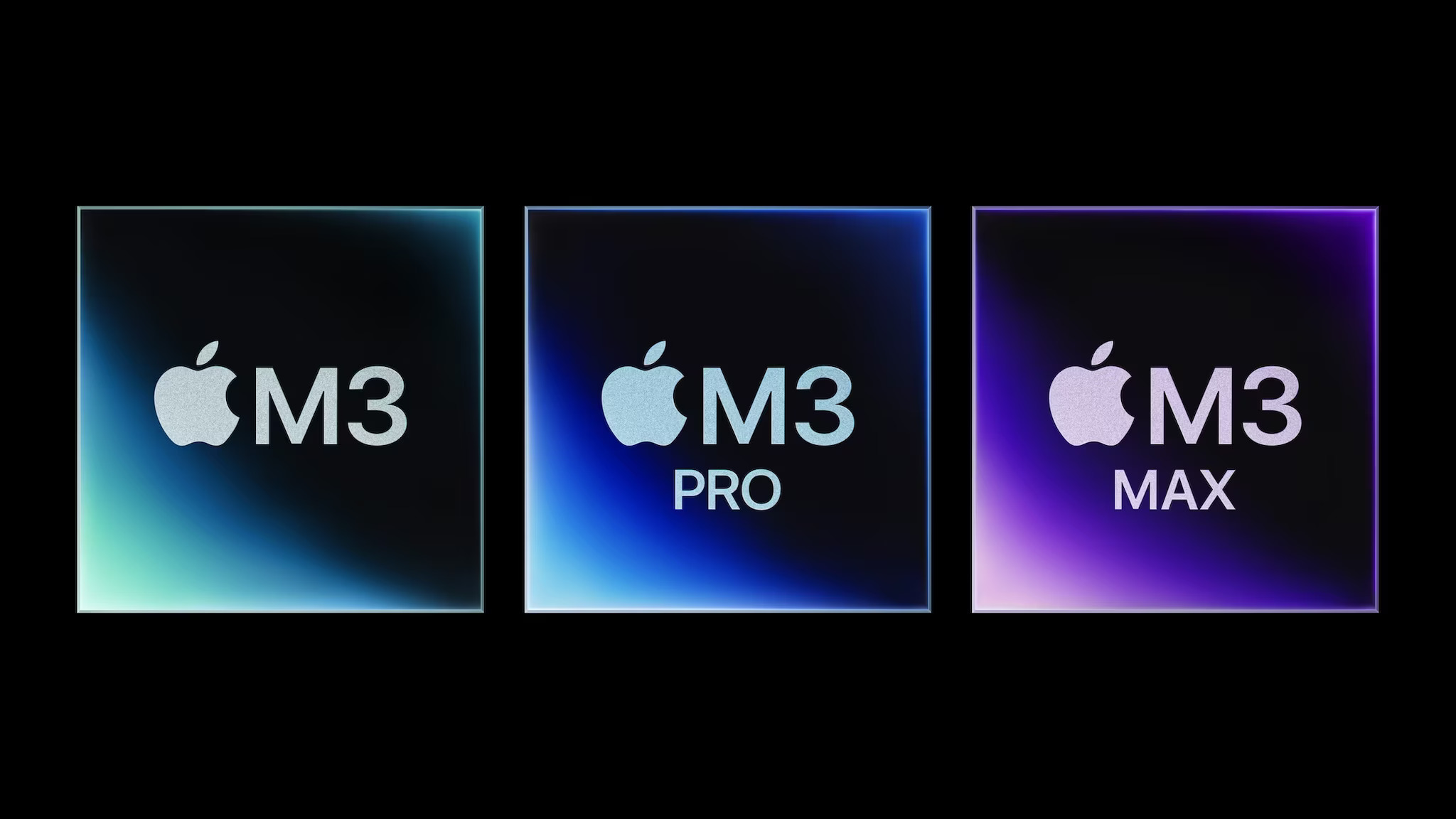
Table of Contents
- 1. Introduction
- 2. Apple’s M3 Chip: The Next Evolution in Apple Silicon
- 3. Unveiling the New MacBook Pro Lineup
- 4. Design and Display Enhancements
- 5. Unleashing Unprecedented Performance
- 6. Revolutionary Graphics Capabilities
- 7. Extended Battery Life for Maximum Productivity
- 8. Enhanced Memory and Storage Options
- 9. Catering to Professional Users
- 10. Pricing and Availability
- 11. The Future of Apple’s M-Series Chips
- 12. Conclusion
1. Introduction
Apple has once again raised the bar in the world of computing with the introduction of its latest M3 chip. This powerful custom-designed chip, built using TSMC’s cutting-edge 3-nanometer process, is set to redefine the MacBook Pro experience. With significant performance improvements and breakthrough graphics capabilities, the M3 chip is poised to revolutionize the way professionals work and create.
In this article, we will explore the features and advancements of Apple’s M3 chip, focusing on its integration into the new MacBook Pro lineup. From design and display enhancements to unparalleled performance and extended battery life, we will delve into the details of this groundbreaking technology. Join us as we delve into the world of the M3 chip and discover how it is set to shape the future of Apple’s MacBook Pro.
2. Apple’s M3 Chip: The Next Evolution in Apple Silicon
Apple’s M3 chip represents the next evolution in the company’s custom-designed silicon. Built using TSMC’s advanced 3-nanometer process, this chip pushes the boundaries of performance and efficiency. With its smaller node size and increased transistor density, the M3 chip delivers enhanced power and speed while maintaining excellent energy efficiency.
The M3 chip features an 8-core CPU, delivering remarkable processing power for demanding tasks. This CPU is further complemented by a 10-core GPU, providing exceptional graphics performance for intensive applications such as video editing and gaming. Apple has also introduced Dynamic Caching, a groundbreaking feature that optimizes GPU memory allocation in real time, resulting in improved performance and efficiency.
3. Unveiling the New MacBook Pro Lineup
Accompanying the launch of the M3 chip is a refreshed MacBook Pro lineup, designed to leverage the full potential of this powerful silicon. The new lineup includes both the 14-inch and 16-inch MacBook Pro models, each available with different configurations to cater to the diverse needs of professionals.
Apple has introduced a sleek new “space black” color option, replacing the previous space gray, giving the MacBook Pro a more sophisticated and powerful aesthetic. The design remains unchanged from its predecessor, featuring a slim profile, a vibrant Retina display, and a versatile port selection.
4. Design and Display Enhancements
While the design of the MacBook Pro remains consistent with previous models, Apple has made significant enhancements to the display. The M3-powered MacBook Pro features a stunning Retina display with improved brightness levels, offering up to 600 nits of brightness for SDR content. This results in a more vibrant and immersive visual experience, ideal for content creators and professionals who demand accurate color reproduction.
Additionally, Apple has incorporated its innovative Mini LED technology into the display, further enhancing contrast and delivering deeper blacks. This technology allows for precise local dimming, ensuring that bright areas are illuminated while dark areas remain truly black. The result is a display capable of showcasing the finest details and providing an unparalleled viewing experience.
5. Unleashing Unprecedented Performance
The M3 chip takes performance to new heights, delivering unparalleled speed and responsiveness. With its 8-core CPU, the M3 chip offers significant improvements over its predecessors, enabling faster multitasking, smoother app performance, and seamless execution of complex tasks. The increased processing power of the M3 chip ensures that professionals can tackle resource-intensive workflows with ease.
Apple’s M3 chip also boasts an impressive 10-core GPU, enabling breathtaking graphics performance. Whether it’s rendering intricate 3D models or playing graphically demanding games, the M3 chip delivers exceptional visual fidelity and smooth frame rates. With the M3 chip, professionals can push the boundaries of creativity and immerse themselves in a world of stunning graphics.
6. Revolutionary Graphics Capabilities
One of the standout features of the M3 chip is its revolutionary graphics capabilities. Apple has incorporated hardware-accelerated ray tracing, a technology that simulates the behavior of light in real-time, resulting in more realistic and immersive graphics. This breakthrough feature opens up new possibilities for game developers, allowing them to create visually stunning worlds with lifelike lighting and reflections.
The M3 chip also introduces hardware-accelerated mesh shading, a technique that optimizes the rendering of complex scenes. By dynamically adjusting the level of detail based on the viewer’s perspective, the M3 chip ensures that every frame is rendered efficiently, resulting in smoother gameplay and improved performance in graphics-intensive applications.
7. Extended Battery Life for Maximum Productivity
Apple understands the importance of all-day battery life for professionals on the go. With the M3 chip, the new MacBook Pro models deliver exceptional battery efficiency, allowing users to stay productive for longer periods without worrying about running out of power. The M3 chip’s advanced architecture, coupled with the macOS power management system, ensures that every watt of energy is utilized efficiently, maximizing battery life.
Apple’s optimization efforts have paid off, with the 16-inch MacBook Pro equipped with the M3 chip offering up to 22 hours of battery life, making it the perfect companion for long workdays and travel. The M3 chip’s power efficiency sets a new standard in the industry, allowing professionals to focus on their work without the constant need for charging.
8. Enhanced Memory and Storage Options
To accommodate the demanding workflows of professionals, Apple has expanded the memory and storage options available with the new MacBook Pro models. With the M3 chip, users can now configure their MacBook Pro with up to 128GB of unified memory, providing ample headroom for multitasking and resource-intensive applications.
In addition to increased memory capacity, Apple offers a range of storage options to suit varying needs. Users can choose from configurations starting at 256GB and scale up to a staggering 8TB of storage, ensuring that professionals have more than enough space to store their files, projects, and media assets.
9. Catering to Professional Users
Apple’s MacBook Pro lineup has always been synonymous with professional-grade performance, and the introduction of the M3 chip only solidifies this reputation. The new MacBook Pro models are designed to meet the needs of professionals across various industries, from photographers and videographers to music producers and software developers.
The M3 chip’s exceptional processing power, combined with its advanced graphics capabilities, ensures that professionals can tackle even the most demanding tasks with ease. Whether it’s editing high-resolution videos, running complex simulations, or compiling code, the M3-powered MacBook Pro delivers the performance required to excel in any creative or technical endeavor.
10. Pricing and Availability
The new MacBook Pro models featuring the M3 chip are available for pre-order starting today, with different availability dates depending on the configuration. The M3 Pro models will be available on November 7th, while the M3 Max models are expected to ship later in November.
Pricing for the new MacBook Pro models varies based on the configuration and storage options. The 14-inch MacBook Pro with M3 Pro starts at $1,999, while the 16-inch model starts at $2,499. For those seeking the ultimate performance and storage capacity, fully kitted-out models can reach prices upwards of $7,199.
11. The Future of Apple’s M-Series Chips
With the introduction of the M3 chip, Apple continues to push the boundaries of what is possible with its custom-designed silicon. The M-series chips have proven to be game-changers, offering unparalleled performance, energy efficiency, and integration with Apple’s ecosystem. As Apple’s chip technology evolves, we can expect even greater advancements and innovations in future iterations.
Apple’s commitment to vertical integration, from hardware to software, allows for tighter optimization and control over the entire user experience. This approach, coupled with the relentless pursuit of technological excellence, positions Apple’s M-series chips as the future of computing.
12. Conclusion
Apple’s M3 chip represents a significant milestone in the evolution of Apple Silicon. With its advanced architecture, groundbreaking graphics capabilities, and exceptional performance, the M3 chip sets a new standard for MacBook Pro users. Professionals across various industries can now unleash their creativity and productivity with a machine that seamlessly handles their most demanding tasks.
The new MacBook Pro models, powered by the M3 chip, offer a compelling combination of power, efficiency, and versatility. Whether you’re a creative professional, a software developer, or a power user, the M3 chip is designed to elevate your productivity and transform the way you work. Embrace the future of computing with Apple’s M3 chip and experience a new level of performance.



Technology
Neural Implants 2026: Neuralink and Brain-Computer Interfaces Become Reality
Neuralink and brain-computer interfaces become reality in 2026. Discover how neural implants are helping paralyzed patients, the latest BCI breakthroughs, and what this means for the future of humanity.


Table of Contents
The Future of Human-Computer Interaction
2026 marks a turning point in brain-computer interface (BCI) technology. Neuralink and competing companies have successfully implanted neural devices in dozens of patients, enabling direct communication between the human brain and digital devices. This technology promises to revolutionize healthcare, gaming, and human potential itself.
Neuralink’s Latest Breakthrough
Elon Musk’s Neuralink has successfully implanted its N1 chip in 47 patients as of March 2026. The results are remarkable:
– Paralyzed patients controlling computers and smartphones with thought alone
– Text input speeds reaching 90 words per minute through neural signals
– Restoration of basic movement in previously paralyzed limbs
– Direct visual cortex stimulation helping blind patients perceive shapes
The device features 1,024 electrodes across 64 threads, each thinner than a human hair, implanted precisely using a surgical robot.
Competing Technologies
Synchron: Uses a less invasive approach with a stent-like device inserted through blood vessels. Already approved for commercial use in Australia.
Blackrock Neurotech: Their Utah Array has been used in research for years and shows promising results for prosthetic control.
Kernel: Developing non-invasive neural interfaces using advanced sensors.
Paradromics: Building high-bandwidth neural interfaces for medical applications.
Medical Applications
Brain-computer interfaces are transforming medicine:
Paralysis Treatment: Patients with spinal cord injuries regaining ability to control external devices and even their own limbs through electrical stimulation.
Stroke Recovery: Accelerated rehabilitation through real-time feedback and brain plasticity enhancement.
Epilepsy Control: Predicting and preventing seizures before they occur.
Depression Treatment: Targeted deep brain stimulation for treatment-resistant depression.
Alzheimer’s Prevention: Early detection and potential intervention in cognitive decline.
Beyond Medicine
The implications extend far beyond healthcare:
Enhanced Gaming: Control games directly with thought, creating unprecedented immersion.
Accelerated Learning: Direct knowledge transfer and enhanced memory formation.
Communication: Thought-to-text and potentially thought-to-thought communication.
Workforce Enhancement: Controlling multiple devices simultaneously, superhuman multitasking.
Ethical Concerns
As this technology advances, serious ethical questions emerge:
– Privacy: Who owns your brain data?
– Security: Can neural implants be hacked?
– Inequality: Will BCIs create a cognitive divide between rich and poor?
– Identity: How do neural implants affect our sense of self?
– Consent: What about cognitive enhancement in children?
Regulatory Landscape
The FDA has established new guidelines for neural implants in 2026:
– Mandatory long-term safety studies
– Strict data privacy protections
– Regular device monitoring and updates
– Patient rights to data deletion
– Prohibition of enhancement uses until further research
The Technology Behind BCIs
Modern BCIs use several approaches:
Invasive: Electrodes implanted directly in brain tissue (Neuralink)
Semi-invasive: Devices placed under the skull but above brain tissue
Non-invasive: External sensors reading brain activity (EEG-based)
Signal processing involves:
– Machine learning to decode neural patterns
– Real-time filtering of noise and artifacts
– Adaptive algorithms that improve with use
– Bi-directional communication (reading and stimulating)
Looking Ahead
Experts predict that by 2030:
– 10,000+ people will have neural implants
– Non-invasive BCIs will reach commercial viability
– Bandwidth will increase 100x
– Costs will drop below $10,000 per implant
– Consumer applications will begin emerging
The brain-computer interface revolution is just beginning. As technology improves and becomes more accessible, we may be witnessing the dawn of humanity’s next evolutionary leap—not through biology, but through technology.
Technology
6G Networks Coming in 2026: What’s Beyond 5G and Why It Matters
Discover 6G networks coming in 2026. Learn about speeds 100x faster than 5G, terahertz communications, holographic meetings, and what this next-generation wireless technology means for the future.

Table of Contents
The Next Generation of Connectivity
While 5G is still rolling out globally, tech companies and researchers are already working on 6G networks. The first 6G trials began in 2026, promising speeds 100 times faster than 5G and latency so low it’s virtually imperceptible. Here’s everything you need to know about the future of wireless connectivity.What is 6G?
6G, or sixth-generation wireless, is the successor to 5G networks. Expected to be commercially available around 2030, early trials and research are happening now in 2026. Key specifications include: – Peak data rates: Up to 1 Tbps (terabit per second) – Latency: Less than 1 millisecond – Frequency bands: 100 GHz to 3 THz (terahertz spectrum) – AI integration: Native artificial intelligence capabilities – Energy efficiency: 100x more efficient than 5GKey Differences Between 5G and 6G
Speed: 5G offers up to 10 Gbps, while 6G aims for 1 Tbps—making it 100 times faster. Latency: 5G has 1-4ms latency; 6G targets sub-1ms for true real-time applications. Spectrum: 6G uses much higher frequency bands, enabling massive bandwidth. AI Integration: Unlike 5G, 6G networks will have AI built into the infrastructure. Applications: 6G will enable holographic communications, digital twins, and immersive metaverse experiences.Who’s Leading 6G Development?
Several countries and companies are racing to lead 6G: China: Has invested over $180 billion in 6G research and launched test satellites. South Korea: Samsung and LG are conducting extensive 6G trials with speeds exceeding 200 Gbps in lab conditions. Japan: NTT DoCoMo aims for 6G commercial launch by 2030. United States: Nokia, Qualcomm, and major universities are collaborating on 6G research. Finland: The University of Oulu’s 6G Flagship program is pioneering research.Revolutionary Applications of 6G
Holographic Communication: Real-time, life-sized 3D holograms for meetings and entertainment. Digital Twins: Perfect virtual replicas of cities, factories, and infrastructure for simulation and optimization. Extended Reality (XR): Seamless AR/VR experiences indistinguishable from reality. Remote Surgery: Surgeons performing operations on patients thousands of miles away with zero lag. Autonomous Everything: Self-driving cars, drones, and robots communicating instantaneously. Brain-Computer Interfaces: Direct neural interfaces enabled by ultra-low latency. Climate Monitoring: Real-time environmental sensing at unprecedented scale.Technical Innovations
6G introduces several breakthrough technologies: Terahertz Communications: Using frequencies between 100 GHz and 10 THz for massive bandwidth. Reconfigurable Intelligent Surfaces: Smart surfaces that can reflect and redirect signals dynamically. AI-Native Networks: Machine learning integrated at every network layer. Quantum Communications: Unhackable communication channels using quantum entanglement. Visible Light Communication: Using LED lights for data transmission.Challenges to Overcome
Despite the promise, 6G faces significant hurdles: – Terahertz waves have very short range and can’t penetrate walls – Requires completely new infrastructure – Higher power consumption concerns – Regulatory challenges for new spectrum allocation – Cost of deployment will be enormous – Health effects of terahertz radiation need studyEnvironmental Impact
Unlike previous generations, 6G is being designed with sustainability in mind: – Energy-efficient network design reducing carbon footprint – Enabling smart grids for renewable energy optimization – Supporting climate change monitoring and mitigation – Reducing need for physical travel through immersive telepresenceWhen Will 6G Be Available?
2026-2028: Research and development, initial trials 2028-2029: Standards finalization, prototype networks 2030: First commercial 6G networks in select cities 2032-2035: Widespread global deploymentImpact on Industries
Healthcare: Remote surgery, real-time patient monitoring, AI diagnostics Manufacturing: Fully automated smart factories with digital twin optimization Entertainment: Holographic concerts, immersive metaverse experiences Transportation: Swarms of autonomous vehicles communicating in real-time Education: Holographic teachers, immersive virtual classroomsThe Bottom Line
6G represents a fundamental shift in wireless technology. While 5G improved upon 4G, 6G will enable entirely new applications impossible with current technology. The ability to transmit data at terabit speeds with near-zero latency will transform how we work, communicate, and live. As trials continue in 2026, we’re getting our first glimpse of this incredible future. The race is on to make 6G a reality by 2030.Neural Implants 2026: Neuralink and Brain-Computer Interfaces Become Reality
6G Networks Coming in 2026: What’s Beyond 5G and Why It Matters
AI Agents Are Taking Over: How Gemini’s Task Automation Changes Everything
Best Smartphones of 2026: Top Picks That Are Worth Every Penny

Peering Through the Apple Vision Pro: A New Perspective on Smart Glasses

The Age of Generative Photography in Art: Transforming Pixels into Masterpieces

Introducing the Powerful M3 Chip: Redefining the MacBook Pro Experience

Exploring the Advanced Features of Chat GPT-4: The Next-Level AI-Language Model

TheTechVamps is Back: A New Chapter Begins

Fastest Growing 5G Smarphone Brand Globally : Q3 2021 Reports

Download Grand Theft Auto V Reloaded (Ultimate Repack)

Make Custom Fortnite Skin in 6 easy steps

Are Bitcoin Transactions Anonymous? Everything Explained

How to Stop Discord From Opening On Startup – Full Guide
Top 7 Games You Can Play With Intel HD 5500, 8GB of RAM, and an Intel i5 Processor

What Is Quickbooks Online – Top Benefits of the Software Package

Email Archiving Open Source – What You Must Learn

10 Best Fortnite Discord Servers of 2020 – Links Included

What is The Name of the General Ledger that Tracks all Bitcoin Transactions?

How to Convert Website Traffic into Qualified Leads using Fastbase and Google Analytics
-

 Gaming6 years ago
Download Grand Theft Auto V Reloaded (Ultimate Repack)
-

 Gaming6 years ago
Make Custom Fortnite Skin in 6 easy steps
-
 Cryptocurrency6 years ago
Are Bitcoin Transactions Anonymous? Everything Explained
-
Technology6 years ago
How to Stop Discord From Opening On Startup – Full Guide
-

 Gaming6 years ago
Top 7 Games You Can Play With Intel HD 5500, 8GB of RAM, and an Intel i5 Processor
-

 Technology6 years ago
What Is Quickbooks Online – Top Benefits of the Software Package
-
Technology6 years ago
Email Archiving Open Source – What You Must Learn
-

 Gaming6 years ago
10 Best Fortnite Discord Servers of 2020 – Links Included